What Is a Wildfire? How These Fires Start, Spread and Get Stopped
- July 19, 2026
- Fire Safety , what is a wildfire
Ask ten people what is a wildfire and most will describe the same thing: a wall of flame racing across a hillside on the evening news. That picture is real, but it misses how these fires actually begin, why some grow unstoppable while others fizzle out, and what decides whether a home in their path survives. Understanding the mechanics turns a frightening spectacle into something you can genuinely prepare for.
What is a wildfire, really
A wildfire is any unplanned fire that burns through vegetation, whether grass, brush or forest, outside of human control. Some start naturally, most often from lightning striking dry timber. The majority, though, are human caused: a stray spark from equipment, an abandoned campfire, a downed power line, a discarded cigarette. What separates a small flare up from a disaster is rarely the ignition itself. It is the conditions the fire meets once it starts.
The three things every fire needs
Firefighters talk about the fire triangle: heat, fuel and oxygen. Remove any one and the fire dies. Out in the landscape, fuel means dry grass, dead branches, resinous shrubs and the litter that builds up over years. Heat and dryness come from weather, the long droughts, high temperatures and low humidity that turn living plants into tinder. Oxygen arrives on the wind, which also carries the fire forward. When all three peak together, a manageable fire can explode into something no crew can hold.
Why wildfires spread the way they do
Wildfires do not crawl politely. They race uphill, because heat rises and preheats the slope above, and they leap ahead of themselves by throwing embers, sometimes a mile or more, that start fresh spot fires in front of the main flames. Wind is the single biggest driver. A shift in wind direction is what most often catches people out, turning a fire's quiet flank into a new, fast moving front. This is why forecasts and early warnings matter so much: the gap between a safe evacuation and a trapped one can be a single hour.
A warming world is changing the odds
The season for these fires is growing longer and more intense across many regions. Hotter, drier summers leave more dead fuel and stretch the window in which it can burn. The same shifts that are reshaping ecosystems and pushing animals into new territory under a warming climate are lengthening fire seasons and drying out forests that once stayed damp. None of this means every fire is preventable, but it does mean more communities now sit in the path of risk than a generation ago.
Not all wildfires are the same
Not all wildfires burn alike. Ground fires smoulder slowly through roots and peat, sometimes for weeks, and are hard to spot. Surface fires run along the forest floor, feeding on grass and low brush. The most dangerous are crown fires, which climb into the treetops and jump from canopy to canopy, driven by wind and nearly impossible to stop head on. A single blaze can shift between these types as terrain and fuel change, which is part of what makes them so unpredictable.
How fires get stopped
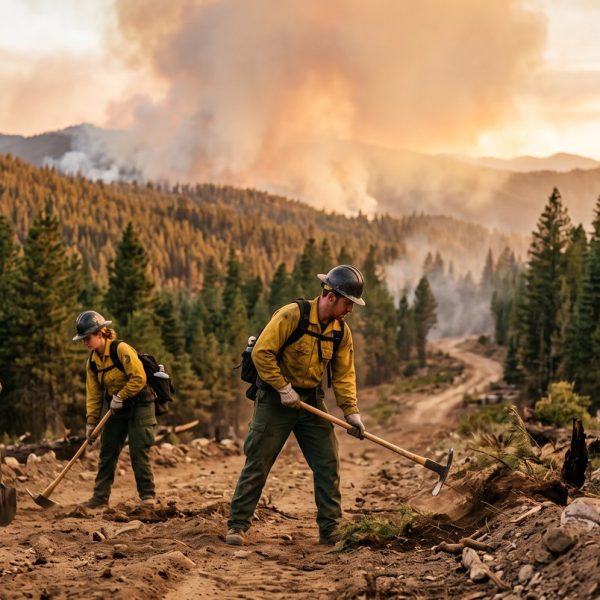
Crews rarely put a large wildfire out directly. Instead they contain it, cutting or burning strips of cleared ground called firebreaks that starve the flames of fuel, dropping water and retardant from aircraft, and steering the fire toward natural barriers like rivers and rock. Weather does the rest, a drop in wind or a welcome rain. Containment is measured as a percentage, the share of the fire's edge that crews are confident will hold. A fire can be enormous and still be ninety percent contained, which is why that figure matters more than the acreage alone. The Wikipedia entry on wildfire lays out these tactics in more depth.
Fire season has reshaped how people move through the western states, and closures now arrive with very little warning. Visitors who read a us national parks map with seasonality in mind tend to notice the alternate approaches and secondary entrances long before they need them. That habit of reading a route as a set of conditions rather than a fixed line is exactly what makes a wildfire year survivable for a holiday plan.
Fire risk is rising fastest in regions that have historically had little of it, which changes what governments have to plan for. East Africa is one of those regions. Anyone following ethiopia news will have noticed drought and land management becoming permanent items rather than seasonal ones.
Protecting your home with simple fire safety tips
If you live anywhere near wild land, a few fire safety tips make a real difference. Clear dead leaves and pine needles from the roof and gutters, and keep a defensible zone of trimmed grass and well spaced shrubs around the house. Store firewood and propane well away from the walls. Screen vents so embers cannot blow inside, which is how most homes actually catch. Keep a go bag ready and agree on an evacuation plan before you ever need it. Official guidance from Ready.gov walks through preparation step by step and is worth reading before fire season, not during it.
Warnings only work if people understand them
Preparation also means information reaching everyone in time. In diverse communities, emergency alerts and evacuation orders have to cross language barriers, which is where clear interpretation services and translated public safety materials save lives. A warning a resident cannot read is no warning at all.
A wildfire is not a random act of nature so much as a predictable meeting of fuel, weather and chance. You cannot control the weather, but you can clear the fuel around your home, heed the warnings and know your way out. Respect these fires, understand how they behave, and you shift the odds in your favour long before the smoke ever appears on the horizon.